Covid-19 Update: The paractice remains under open during the current pandemic
Fly Family Therapy & Neurotherapy

Menu
services
Neurofeedback
What is Neurofeedback?
Neurofeedback is a way of helping the brain regulate itself more effectively. Many challenges—such as anxiety, depression, attention difficulties, sleep issues, migraines, and emotional regulation problems—are linked to brain dysregulation. Neurofeedback can also support individuals living with organic brain conditions such as epilepsy, autism spectrum disorder, cerebral palsy, and traumatic brain injury by improving overall brain function.

What is Neurofeedback
Good For?
Individuals of any age can benefit from EEG training. Neurofeedback can help a variety of childhood problems including bedwetting,
nightmares, attention deficits and other forms of disrupting and disturbing behaviors. Neurofeedback can assist adolescents who might struggle with anxiety and depression, or drug and alcohol use. Neurofeedback can help maintain good brain function as we age. And peak performers use EEG training to enhance their abilities in sports, business and the arts.
Is Neurofeedback a Cure?
Neurofeedback improves regulation, but it is not considered a cure. For organic brain conditions, the goal is improved functioning, not elimination of the condition. For issues of dysregulation, the focus is on teaching the brain to self-regulate. While the word “cure” doesn’t apply, many people experience lasting symptom reduction or even complete relief.
- Someone with ADHD may learn to sustain focus to the point where the diagnosis no longer applies.
- A person with migraines may stop experiencing them, though they may still be more vulnerable than others.
- An individual with epilepsy may stop having seizures, though the underlying susceptibility remains.
In other words, neurofeedback often improves or resolves symptoms by improving the brain’s regulation, giving people the freedom to function more effectively in daily life.


How Does Neurofeedback Work?
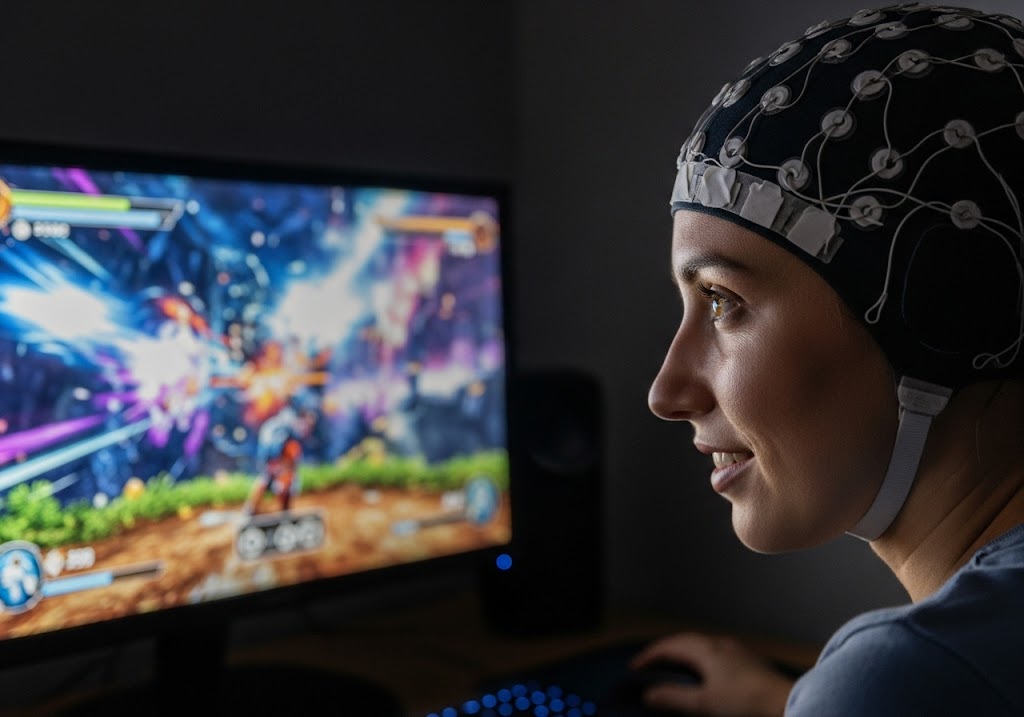
During a session, small sensors are placed on the scalp to measure brainwave activity. This information is processed by computer and fed back to the client in real time—often through a video game or visual display. The brain learns from this feedback:
- Certain brainwave patterns are encouraged.
Others are reduced.
- Over time, the brain “practices” healthier patterns, leading to more stable, regulated functioning.
The exact training protocol depends on the individual’s symptoms, goals, and brain activity.
What Conditions Can Neurofeedback Help?
Neurofeedback can be beneficial for people of all ages and levels of functioning. Some of the conditions where it has shown effectiveness include:

- ADHD and attention difficulties
- Anxiety and depression
- PTSD and trauma-related symptoms
- Migraines and chronic pain
- Seizure disorders (including epilepsy)
- Sleep problems
- Traumatic brain injury and stroke recovery
- Autism spectrum disorder
- Reactive attachment disorder
- Addictions
How Do We Decide on Training?
Over time, researchers and clinicians have developed training protocols shown to be effective for different types of problems (e.g., attention, mood, seizure regulation). At our practice, we use a combination of neurodiagnostic tools and neuropsychological assessments to determine the best training approach for each individual. This ensures the protocol is tailored to your unique needs and goals.

Types of Neurofeedback Services We Offer
Infra-low neurofeedback is a form of brain training that works at the deepest, slowest levels of brain activity—below what is usually measured on standard EEGs. Instead of directly “teaching” specific mental states, it helps the brain become more stable and flexible by training its core regulatory networks. You can think of it as giving the nervous system feedback on its own activity so it can self-correct, much like holding up a mirror that allows the brain to see and adjust itself.
For clients, this often translates into greater resilience, improved emotional regulation, and reduced symptoms of conditions like trauma, depression, anxiety, or sleep disturbance. Rather than being directive, the training supports the brain’s own capacity to find balance. It’s like building a stronger foundation under a house: once the foundation is stable, the whole system functions more smoothly, and higher-level therapeutic work can be more effective.
Z-Score Neurofeedback is a specialized form of brain training that compares your brainwave activity to a large database of healthy, age-matched brains. During a session, sensors measure your brainwaves in real time, and the system provides feedback when your brain activity moves closer to these “optimal” patterns. This process helps the brain learn to regulate itself more efficiently, supporting healthier functioning.
Unlike traditional neurofeedback, which targets specific frequencies or brain regions, Z-Score training continuously adjusts based on real-time data. This allows for a more flexible and individualized approach. At our practice, we offer both 4-channel and 19-channel (whole head) Z-Score training, depending on the individual’s needs and goals. Many clients find it helpful for issues like attention, mood regulation, anxiety, sleep problems, and recovery from brain injury—though the ultimate goal is the same: guiding the brain toward balance and resilience.
qEEG Brain Mapping (quantitative EEG) provides a detailed look at how your brain is functioning by recording and analyzing brainwave activity. The results are displayed as a “map” that highlights areas of balance and areas where regulation may be off. This information can be used to guide personalized neurofeedback training, establish a baseline for athletes or clients beginning treatment, and track progress over time. In some cases, qEEG